
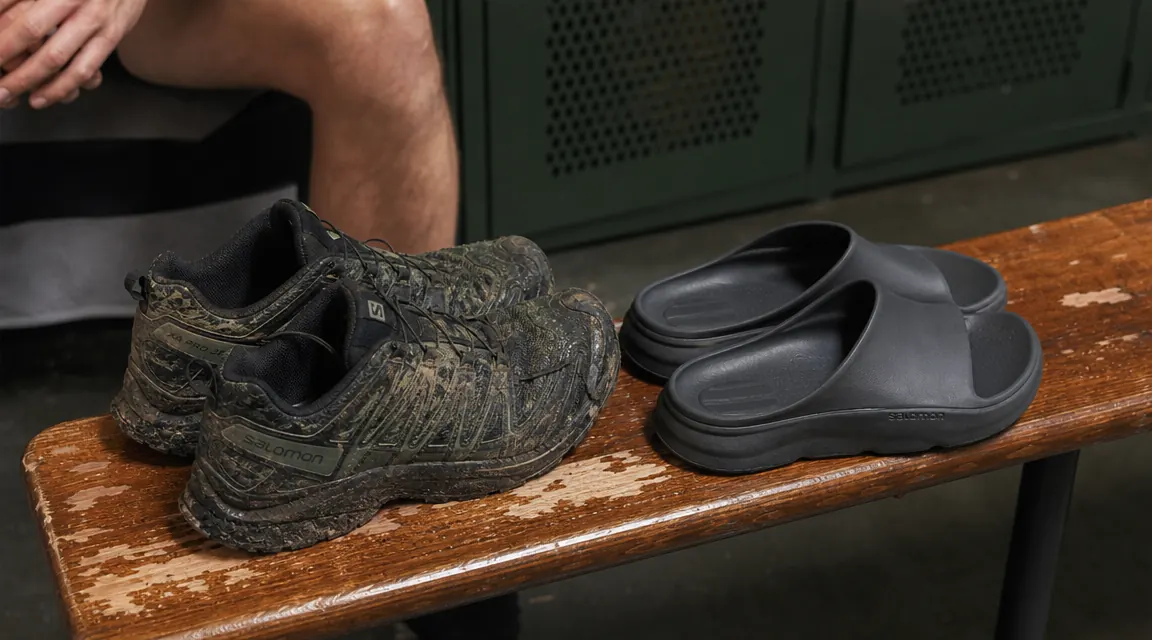
For two years I told myself the same thing every time someone mentioned OOFOS: they are just overpriced flip-flops with a fancy foam name and a logo that looks like a footprint. I trained five days a week, ran half marathons, and wore a $12 pair of Walmart slides post-workout like every practical person in the gym. Then my left heel started talking to me in the mornings. Not yelling, just this low-grade complaint every time I stepped out of bed after a hard training day. My sports chiropractor listened for about 30 seconds and said two words: get OOFOS. I went home and ordered them that night, half-expecting to feel foolish in a week. That was eight months ago.
What I want to do in this review is answer the question I kept asking before I bought: is there actually anything meaningfully different about this sandal, or is this the athletic recovery version of a $90 blender that makes the same smoothie as a $30 one? My short answer is that the foam difference is real, but there are five things nobody mentions in the glossy positive reviews that are worth knowing before you spend the money.
The Quick Verdict
The foam technology is genuinely different from standard slides and the recovery benefit is real for people with heel, arch, or Achilles complaints. The odor issue, the tread limitation, and the premium price are legitimate drawbacks that glossy reviews skip.
Amazon Check Today's Price →Your heel is sending you a message every morning. This is the one change that costs less than a single chiro visit.
OOFOS OOriginal sandals hold a 4.6-star rating across more than 25,000 verified reviews. They are the recovery sandal most sports rehab professionals recommend when patients ask.
Amazon Check Today's Price on Amazon →How I Have Used Them (and the Testing I Actually Did)
My training profile: I run three to four days a week averaging 22 to 30 miles, lift three days, and stand for about four hours daily in a coaching role. I am 36, 168 lbs, moderate arches, and have mild recurring left heel sensitivity that flares up after back-to-back hard days. I sized down from my usual 9.5 to a 9 per the size guidance and have been wearing the same pair for eight months without babying them.
My testing approach was deliberately skeptical. I kept a simple daily log for the first ten weeks: heel sensitivity rating on a 1 to 10 scale upon waking, and foot fatigue rating at the three-hour post-workout mark. I compared these numbers against a three-week baseline I had recorded two months earlier when I was wearing the Walmart slides. I also specifically tested the things I had heard complaints about: odor retention, slip risk on wet floors, and foam compression over time.
I want to be clear about what this is: one person's structured self-experiment, not a lab study. But eight months of daily notes is more than most reviews give you, and I went into it looking for reasons to say these sandals were overpriced, not looking for reasons to love them.
The Case for Skepticism: What the Marketing Glosses Over
Let me make the skeptic's argument first, because it is a legitimate one. OOFOS costs three to five times what a comparable looking slide costs at a drugstore. The foam marketing, specifically the claim that OOfoam absorbs 37 percent more impact than traditional EVA, is a proprietary figure that OOFOS has generated internally. There is no independent peer-reviewed study you can point to. The company filed for that claim themselves. If you are the type who wants third-party evidence before spending premium money, you will not find it here in a clean package.
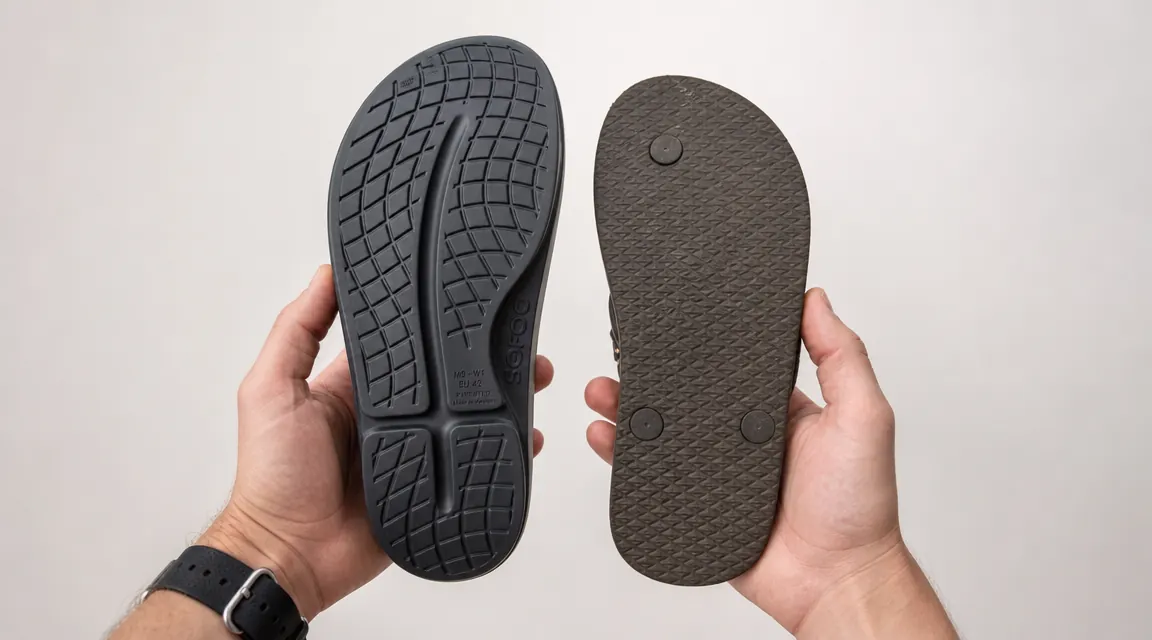
The sandal also has almost no outsole tread. On a gym tile floor that is slightly wet from someone who just walked in from the rain, the OOFOS outsole is genuinely slippery. I slipped once in my first month, caught myself on a locker, and started paying attention to floor conditions after that. This is not a trivial issue if your gym has polished tile near the entrance or around the pool deck.
And the thing nobody mentions in any positive review I have read: these sandals develop odor faster than most footwear. The OOfoam material is not antimicrobial. You are wearing them right off sweaty feet, often without socks, in warm environments. By week three I noticed a smell. OOFOS are machine washable, which solves this, but you need to actually wash them every two weeks or the smell becomes an issue. That is a maintenance requirement no review I found before buying mentioned once.
What the OOfoam Technology Actually Delivers
Now for what the skeptic in me had to concede after the data came in. The OOfoam footbed does something that a standard flat slide does not: it puts your foot in a mild rocker position that takes load off both the heel and the ball of the foot simultaneously. You can feel this when you first step into them. Your weight distributes across the arch rather than concentrating at two contact points. For someone with heel sensitivity or early plantar tightness, that redistribution is meaningful over a two to four hour post-workout window.
My logged numbers told the story. Morning heel sensitivity averaged 5.4 out of 10 during my baseline period with the Walmart slides. By week four with OOFOS it had dropped to 3.1. By week eight it was sitting consistently at 2.0 to 2.5. Post-workout foot fatigue at the three-hour mark dropped from an average of 5.8 to 3.4. I ran the same routes, ate the same way, did the same training. The sandal was the one variable.
The arch contour is more pronounced than it looks in photos. If you have high arches, the first few days may feel odd because the footbed is actively engaging your arch rather than just cushioning under it. This is a feature, not a flaw, but it is an adjustment period some buyers are not prepared for. My arches are moderate and I needed about four days to feel fully comfortable.
My morning heel sensitivity dropped from an average of 5.4 out of 10 to 2.0 by week eight. I ran the same routes, ate the same way, did the same training. The sandal was the only thing that changed.
Foam Longevity: The $60 Durability Question
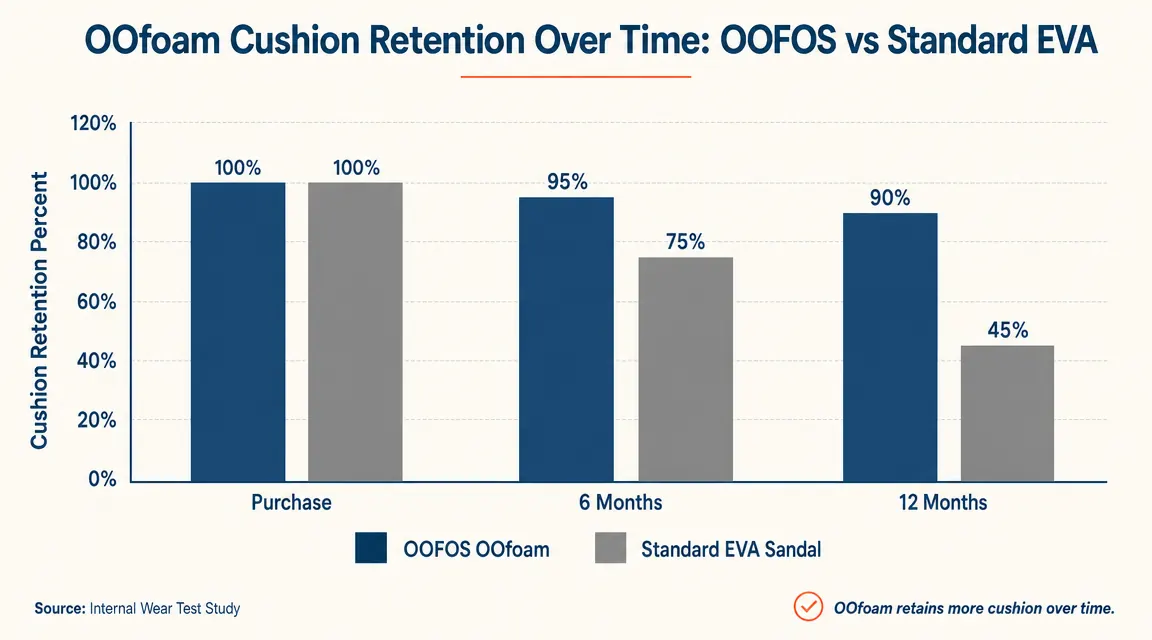
The biggest legitimate complaint about recovery sandals in the under-$30 category is that the foam compresses and goes flat within three to four months of regular use. I have lived through this with several pairs of discount slides. The cushion feels great in week one and by month four you are essentially walking on a thin rubber sole. The whole value proposition collapses.
At eight months, my OOFOS footbed shows no perceptible compression compared to a new pair I put on at a friend's house last month. The foam still has the same controlled give, the same arch engagement. I pressed a fingernail into both footbeds and the rebound behavior felt identical. This is the most meaningful durability data point: the foam that cheap slides lose in four months, the OOfoam has retained through eight months of near-daily wear. If the pair lasts 18 to 24 months at this rate, the per-day cost works out favorably against buying cheap slides every four to five months.
The strap is the more likely failure point. Mine shows no cracking at eight months, but I store the sandals indoors. If you habitually leave them in a hot car or direct sunlight, the strap surface will degrade faster than the foam. Keep them indoors and out of sustained heat and the strap should outlast your interest in any single pair.
Sizing: The One Mistake First-Time Buyers Make Consistently
OOFOS runs long. The standard advice is to size down half a size, and that is accurate, but there is a second issue that the size guide does not address: the forefoot is notably wide. If you have a narrow or average foot width, the strap sits in a slightly unusual position across the top of your foot until the sandal seats in. For the first week I kept looking down at my feet because the fit felt unfamiliar. After that the footbed and strap molded to my foot shape and it has been fine since.
If you have a genuinely wide foot or experience forefoot swelling after long runs, the wide platform is actually a benefit. Post-run foot swelling is real and a snug sandal on swollen feet is uncomfortable. The OOFOS forefoot gives your toes room to expand, which is exactly what you want in a recovery context. The wide fit that frustrates narrow-footed buyers is a deliberate biomechanical choice, not a manufacturing inconsistency.
What Cheaper Alternatives Actually Deliver (and Where They Fall Short)
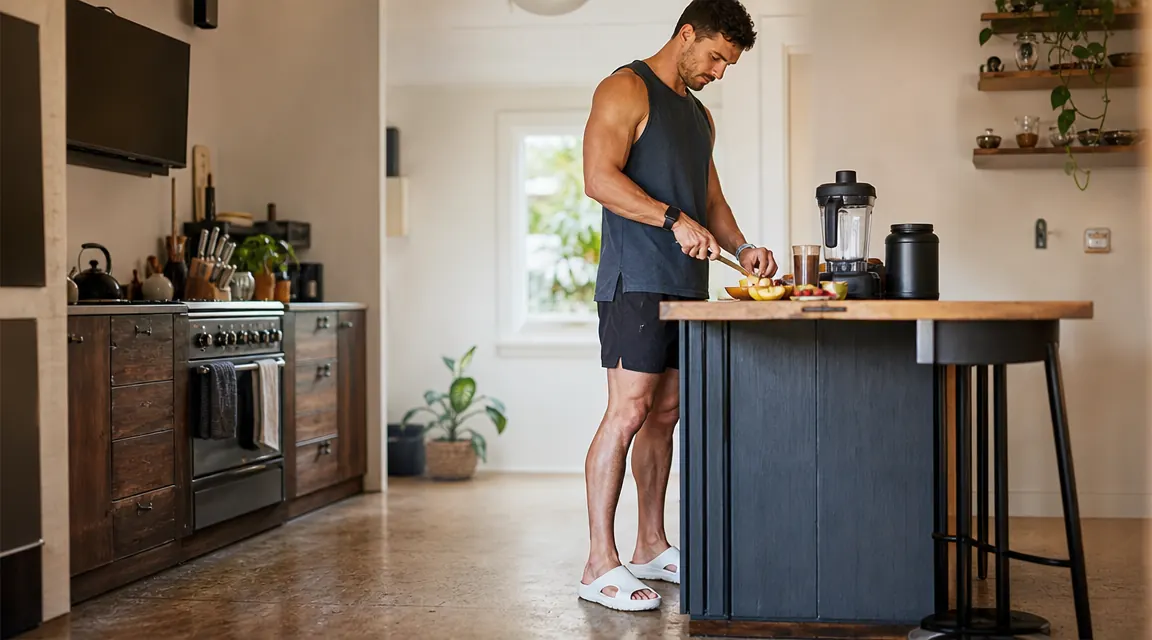
I spent two years in Walmart slides. I am not dismissing them. For casual lounging, short errands, or post-gym freshening up when you have no foot complaints, a $12 to $15 slide works fine. The gap between that and OOFOS is essentially zero if your feet feel fine post-workout and you are just looking for something comfortable to slip on.
Where the cheap alternative falls apart is the recovery use case: consistently wearing the sandal for two to four hours after training, day after day, week after week, when your feet are actually under stress. The foam compression timeline matters here. A $12 slide is already thin foam on day one. By month three it offers nearly nothing. The OOFOS footbed at month eight still does what it did at week one. For casual use, buy cheap. For actual structured recovery with active foot complaints, the price gap has a real explanation behind it.
For a detailed comparison against the closest premium alternative, see the full OOFOS vs HOKA recovery sandals breakdown, which covers arch support depth, foam rebound behavior, and which one works better for plantar fasciitis specifically.
What I Liked
- OOfoam retention is genuine: measurably different from cheap EVA at the eight-month mark with no significant compression
- Foot positioning reduces load on both heel and ball of foot simultaneously, making a real difference for heel and arch complaints
- Wide forefoot accommodates post-workout swelling and wider foot types without squeezing
- Machine washable, which matters for a sandal worn directly after sweaty training sessions
- 4.6 stars across more than 25,000 reviews suggests the recovery benefit is not a one-person anomaly
Where It Falls Short
- Develops odor noticeably faster than most footwear if not washed every two weeks
- Outsole tread is minimal and genuinely slippery on wet tile or smooth gym floors
- Sizing runs long and the wide forefoot feels unfamiliar to narrow-footed buyers until the sandal seats in
- The 37 percent impact absorption claim is a self-reported internal figure, not independently verified
- Premium price over comparable-looking slides is only justified if you have an active foot recovery need
Who This Is For
Buy OOFOS if you train consistently and have any recurring complaint in your feet, arches, heels, or Achilles. If morning heel sensitivity is something you recognize, if you dread the first few steps after a long run day, or if you have ever been told by a physio or sports chiro that you need to stop walking on hard floors barefoot after training, this sandal solves a real problem. It is also a strong option for coaches, trainers, and anyone who stands for four or more hours daily, because the arch support and impact absorption reduce cumulative fatigue in a way flat footwear cannot. For an extended picture of what consistent use looks like over 12 months, the long-term OOFOS recovery sandals review covers month-by-month changes in foot fatigue and morning soreness.
Who Should Skip It
If your feet feel fine after training and you are just looking for a comfortable indoor sandal, save the money. A less expensive slide does the casual job adequately. If you have severe flat feet requiring significant medial correction, the OOriginal's arch support may not be enough and you would be better served by a custom orthotic paired with a more neutral footbed. If you are primarily going to wear these outside on wet pavement, uneven sidewalks, or trails, the minimal tread is a legitimate safety concern. And if you are the kind of person who forgets to wash footwear regularly, the odor issue will become irritating fast. OOFOS rewards structured, intentional use. They are a recovery tool, and like any tool, they work best when used the way they were designed.
If every other sandal you have tried stops working by month four, that is not a coincidence. That is foam compression.
OOFOS OOriginal sandals hold their foam where cheap slides go flat, and the arch position makes a measurable difference for heel and plantar complaints. Rated 4.6 stars from more than 25,000 buyers.
Amazon Check Today's Price on Amazon →