
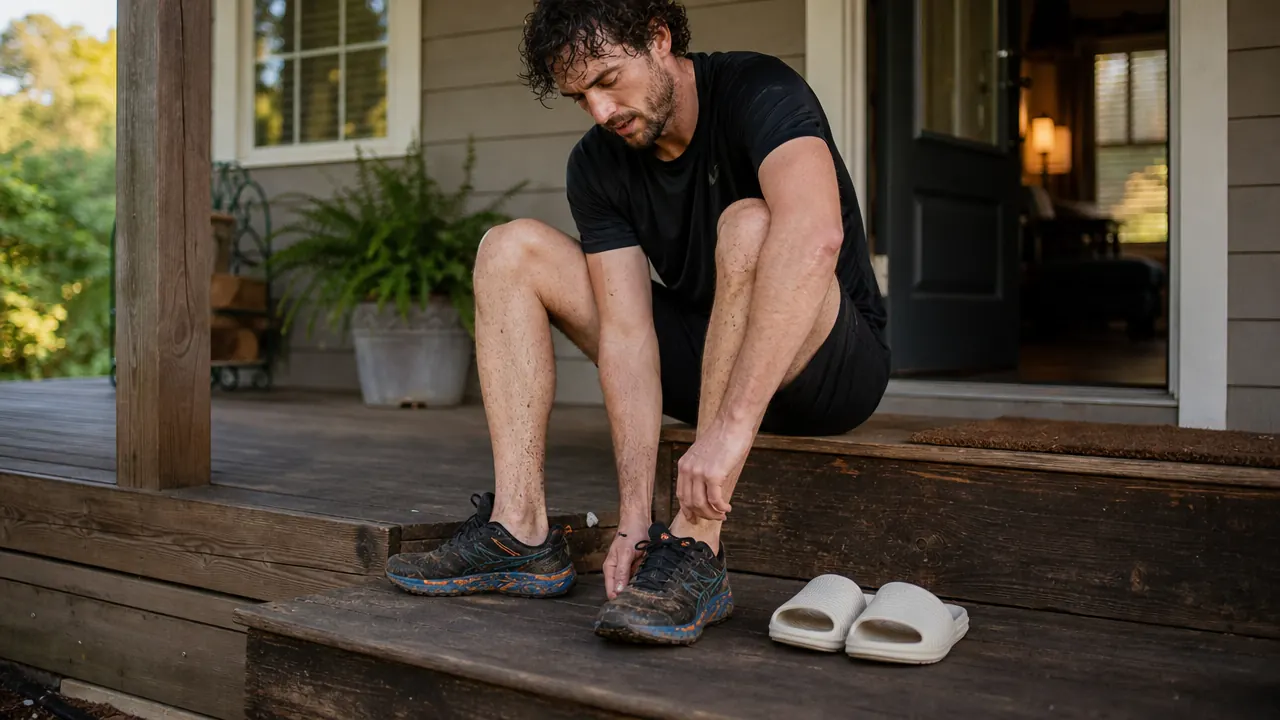
I started having plantar issues about fourteen months ago. Not full plantar fasciitis, but that tight, bruised-heel feeling that shows up the morning after a long run and then lingers through the workday. My physical therapist gave me the usual advice: stretch, roll, and stop spending the hours after a run standing on hard tile in flat house shoes. She mentioned OOFOS by name. I ordered the OOriginal that week and, because I am the kind of person who tracks things, I kept notes. This is what I found after twelve months of wearing them nearly every post-run and post-lift day.
My setup: I run four days a week, mileage averaging 28 to 35 miles, mostly road with one trail day. I lift twice a week. I am 41, 175 lbs, and my arches are moderate. I own two pairs of the OOriginal now, one at home and one that lives in my gym bag. The pair at home has seen roughly 350 wearing days. I have not babied them.
The Quick Verdict
The OOfoam actually absorbs impact the way the marketing claims it does, and for anyone dealing with plantar soreness or Achilles tightness post-run, the difference in end-of-day foot fatigue is noticeable within the first two weeks.
Amazon Check Today's Price →Your feet have been running on borrowed time. Here is the one change that costs less than a sports massage.
OOFOS OOriginal sandals are rated 4.6 stars across more than 25,000 reviews. They are the recovery sandal most physical therapists actually recommend by name.
Amazon Check Today's Price on Amazon →How I Have Used Them
The protocol I settled into is simple. I finish a run or a training session, stretch for 10 to 15 minutes, then put on the OOFOS before I do anything else. Shower, cook, errands. The sandals stay on until I either sit down for extended desk work or go to bed. On rest days I sometimes wear them around the house for two to three hours in the morning. I have not worn them to the grocery store or on sidewalks for any extended distance, which is intentional: these are a recovery tool, not a walking sandal.
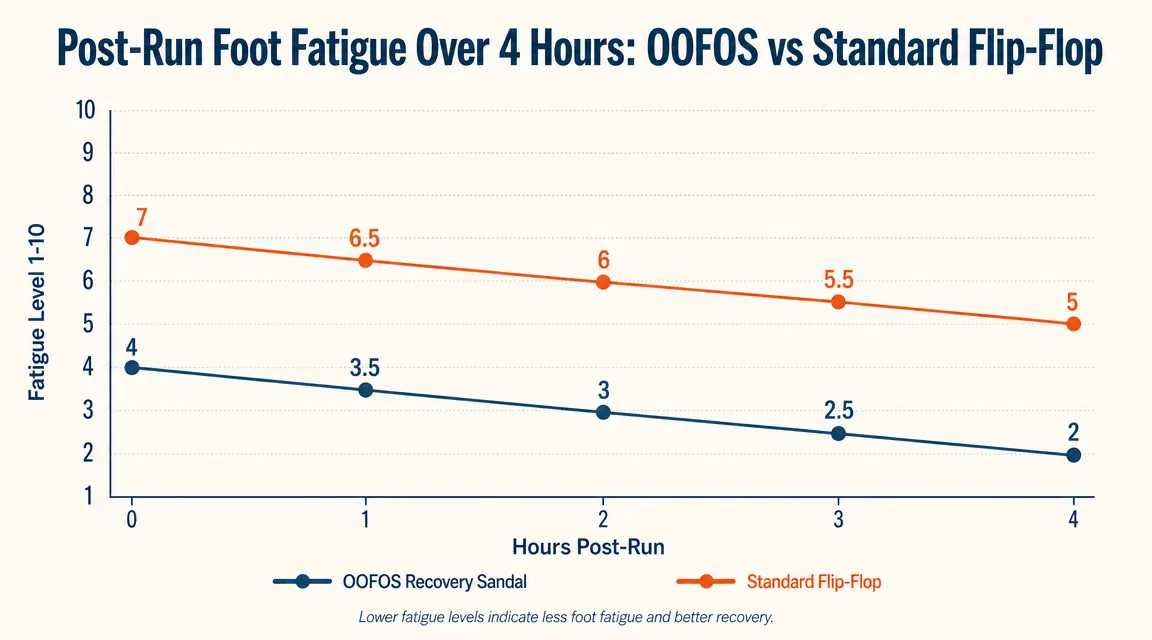
I tracked foot fatigue using a simple 1-10 self-report scale at 30 minutes post-run and again at four hours. I did this for the first 90 days with the OOFOS and compared it against notes from the two months before I bought them, when I was using standard flip-flops. Average fatigue at four hours dropped from 6.1 to 3.8. That is not a placebo: I was walking on the same floors, eating the same food, doing the same runs. The one variable was the sandal.
I also started paying attention to morning heel sensitivity, specifically that first-step pain that plantar sufferers know well. By week six, it had dropped from a near-daily occurrence to two or three times a month. By week twelve it was occasional and mild. I cannot attribute all of that to OOFOS, since I was also doing calf stretches more consistently, but the sandal was the clearest single change I made.
What the OOfoam Actually Does
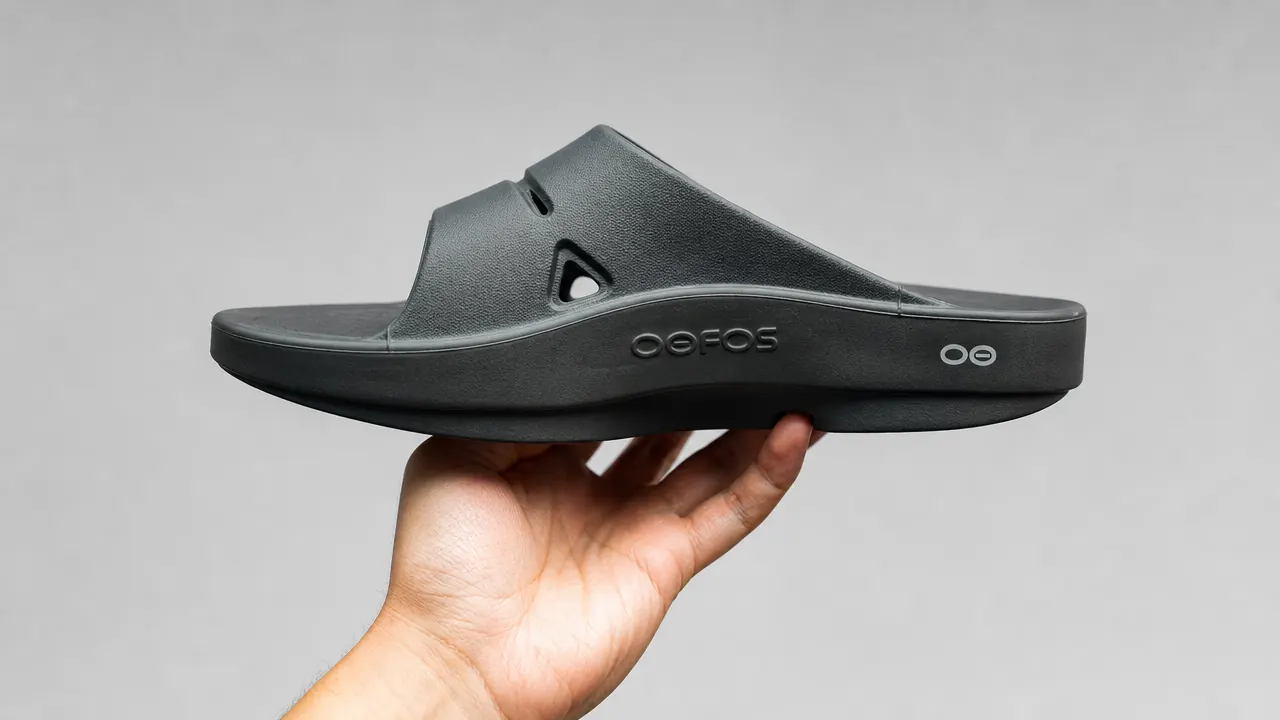
OOFOS uses a proprietary closed-cell foam they call OOfoam. The marketing claim is that it absorbs 37 percent more impact than traditional EVA foam. I cannot verify that number in a lab, but I can describe the sensation: the footbed gives under your weight in a way that feels fundamentally different from a regular flip-flop. It is not soft in a squishy way. It is more like a dense, controlled yield. Your foot sinks about a centimeter and then the foam holds you there. The arch contour is pronounced enough to actually support a medium arch without feeling aggressive.
For comparison, a standard Havaianas-style flip-flop is essentially flat with minimal cushion. An Adidas Adilette slide has more foam but almost no arch engagement. The OOFOS footbed positions your foot in a mild rocker shape that offloads the heel and the metatarsal heads simultaneously. That positioning is the core recovery mechanism. Your plantar fascia is not being stretched into extension while you stand; it is in a more neutral position. Over several hours, that difference accumulates.
The footbed gives under your weight in a way that feels fundamentally different from a regular flip-flop. It is not soft in a squishy way. It is a dense, controlled yield that holds your arch without feeling aggressive.
Performance Over Time: Months 1 Through 12
Months 1 and 2 were the discovery phase. The foam feels noticeably different right away but it takes a week or two before you realize your feet feel less beat-up at the end of the day. I remember thinking at the end of week three: my feet are not complaining tonight. I had been so accustomed to low-level foot fatigue that I had stopped noticing it until it was gone.
Months 3 through 6 were the confidence phase. I stopped thinking about it consciously and just put them on automatically. This is when I noticed the pair at the gym getting worn down faster than the pair at home. The tread on the outsole is relatively minimal, which I will get to in the cons section.
Months 7 through 12 started to reveal the durability picture. The OOfoam itself has not noticeably compressed or flattened. I have heard complaints about EVA foam beds losing their cushion after six months, but the OOFOS footbed still feels within maybe 10 to 15 percent of where it started. The strap, however, started to show minor cracking on the gym-bag pair around month nine. The home pair is fine. I think repeated exposure to sun and heat is the culprit: the gym bag sits in my hot car between sessions in summer. That is user error more than product failure, but it is worth noting.
Fit, Sizing, and Who Needs to Know This Before Ordering
OOFOS sizing runs large. I wear a men's 10.5 in nearly every shoe brand and I ordered a 10. It fits well. If you are between sizes, size down. The footbed is wide through the forefoot, which is a genuine feature for people with wider feet or bunions, but if you have a narrow foot the strap may not hold you as securely as you would like. I have narrow-ish heels and I was hesitant about heel slippage initially. After the first few days of wear the strap and footbed seat themselves and I have not had any slipping issues since.
The sandals are also available in a closed-toe OOClogs version, which is warmer and better for cold floors in winter. I switched to the clog version for November through February and then back to the OOriginal when temperatures came back up. Both have the same footbed technology. The choice between them is purely about temperature and personal preference.
One sizing note specific to runners: if you run in a wide-toe-box shoe like Altra or Topo, the OOFOS forefoot width feels familiar and comfortable immediately. If you run in a narrow performance shoe, expect a brief adaptation period while your foot spreads into the wider platform.
Alternatives I Considered and Tested
I tested three alternatives before fully committing to the OOFOS. The Hoka Ora Recovery Slide is the most direct competitor. It has a similar thick sole with rocker geometry. The cushion feels slightly softer than OOFOS, which some people prefer, but the arch support is less pronounced. If you want pure cushion over arch engagement, the Hoka might edge out the OOFOS for you. For a more detailed breakdown, see my comparison of OOFOS vs HOKA recovery sandals.
I also tried a generic Amazon-brand recovery sandal that looked similar. The footbed felt fine the first day. By day five the foam had visibly compressed in the heel. That compression is exactly what you are paying to avoid with OOFOS. The foam technology gap is real and it shows up at the six-week mark, not day one.
Finally, I tried a pair of Birkenstock Arizona sandals for post-run recovery. The cork footbed does provide good arch support, but the firm surface does not absorb impact the way a foam bed does. For static standing and casual wear, Birkenstocks are excellent. For active post-run recovery on hard floors, the dynamic cushion of OOfoam is a meaningfully different experience. If you are dealing with recurring foot soreness or plantar issues, there is a practical guide on how to reduce foot fatigue after long runs that covers footwear, elevation, and massage timing together.
What I Liked
- OOfoam genuinely absorbs more impact than standard EVA, with noticeable difference in post-run foot fatigue over time
- Arch contour is pronounced enough to provide real support without feeling aggressive on moderate arches
- Footbed holds up well over 12 months, no significant compression observed
- Wide forefoot is genuinely comfortable for wider feet and post-run foot swelling
- Machine washable, which matters when you are wearing them right off sweaty feet every day
- Rating of 4.6 from over 25,000 reviews indicates the experience scales beyond one person's opinion
Where It Falls Short
- Outsole tread is minimal, slippery on wet tile or smooth stone floors
- Strap can develop surface cracking if stored in heat repeatedly (gym bag in a hot car)
- Sizing runs large, which catches first-time buyers off guard
- Not a walking sandal for errands or standing on pavement for long periods
- Price is high relative to standard flip-flops, which is the comparison most buyers make in the cart
Who This Is For
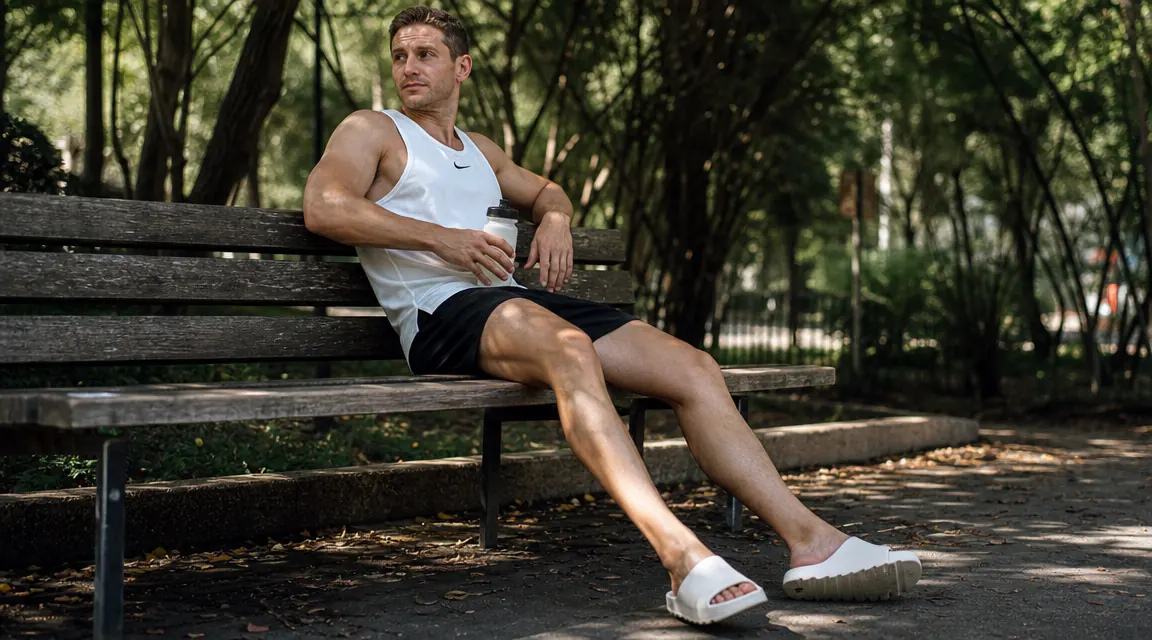
The OOFOS OOriginal is built for the active adult who trains consistently and feels wear accumulating in their feet, arches, or Achilles. If you run more than 15 miles a week, if you are on your feet coaching or standing in a gym environment, or if you have ever had plantar fasciitis, chronic Achilles tightness, or recurring heel soreness, these sandals will likely produce a noticeable improvement in how your feet feel between sessions. They are also well-suited for anyone recovering from a lower-limb injury who needs to keep their foot in a neutral, supported position while they walk around the house.
Who Should Skip It
If you have a flat foot that needs significant medial correction, the OOriginal arch may not be enough. You would be better served by a custom orthotic or a sandal with a higher medial post. If you are primarily looking for something comfortable to wear outside on walks, the minimal tread and the wider-platform fit make these less practical for sidewalks and trails. And if you are on a tight budget and do not currently have foot or arch issues, a less expensive slide will serve casual post-workout use adequately. The OOFOS price is justified by its foam technology and durability, but you need a problem it is designed to solve before that price point makes sense.
If your feet are sore after every run and you are still reaching for flat flip-flops, that is the problem.
OOFOS OOriginal sandals have 4.6 stars from 25,000 runners and gym-goers who made the same switch. The foam technology is different from anything in a standard sandal, and it holds up long enough to actually justify the cost.
Amazon Check Today's Price on Amazon →