

Eight months ago I was rolling my IT bands on a solid foam cylinder I grabbed at a hardware store for $12. It was round. It was white. It did about 20 percent of what I needed. My left quad stayed knotted from Monday to Thursday no matter how long I spent on it, and my thoracic spine felt like a stack of locked bricks after every deadlift session. My physical therapist asked what foam roller I was using. When I told her, she said three words: get a GRID.
I am a 41-year-old recreational lifter, 185 lbs, training four days a week. My lower body programming is squat-heavy and I have had recurring left hip flexor tightness since a hamstring pull in 2022. I am not a physical therapist or a certified trainer. I am someone who has now used the TriggerPoint GRID 1.0 foam roller at least three times per week for eight straight months, and I have specific things to say about what it does well, what it does not do, and whether it belongs in your recovery kit.
The Quick Verdict
The multi-density surface produces noticeably more targeted release than a smooth roller, and after 8 months mine shows zero deformation. Best for intermediate-to-advanced athletes who already know basic foam rolling technique.
Amazon Check Today's Price →Still rolling on a plain foam tube? Your IT bands deserve better than that.
The TriggerPoint GRID 1.0 has 4.7 stars across 31,000+ Amazon reviews. Check today's price before it changes.
Amazon Check Today's Price on Amazon →How I Have Used It
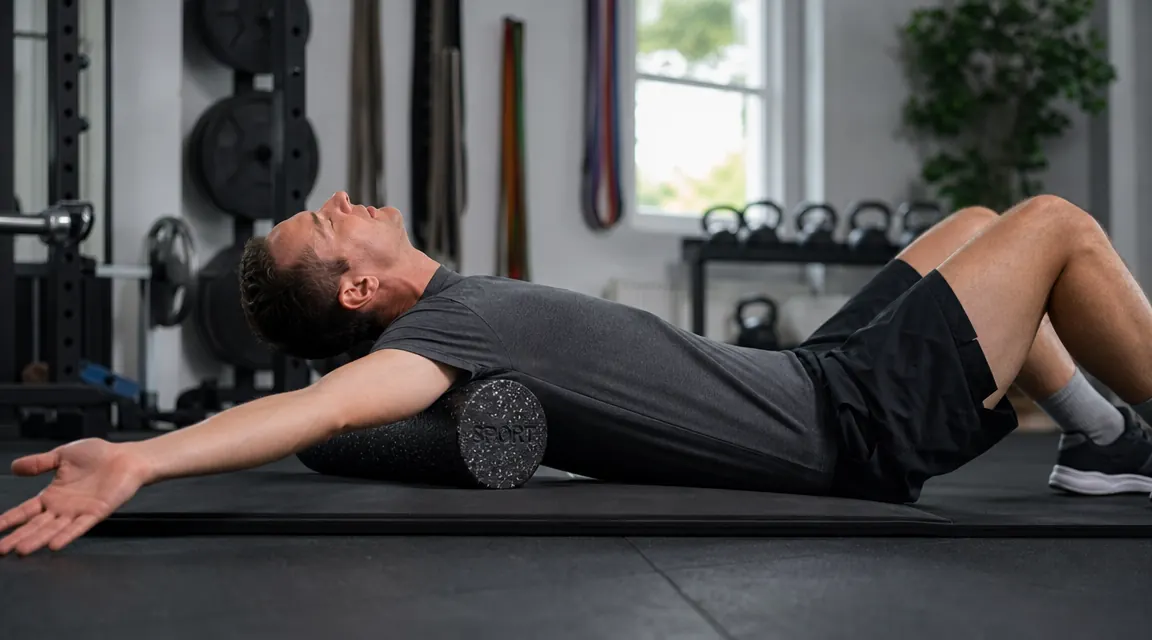
My rolling routine runs about 10 to 15 minutes post-workout, three to four times per week. Primary targets are my left quad and TFL (where I carry most tension), both hamstrings, my calves, and a thoracic extension pass over the GRID using a lengthwise position. On rest days I sometimes do a shorter five-minute session for my upper back when I have been sitting at a desk for hours.
I keep the GRID in my gym bag. It lives there. It has been in airport security twice, rolled across hotel room floors, and used on concrete in a parking garage after a race. The outer shell has one small scuff from a luggage zipper and otherwise looks the same as it did in month one. That durability is notable because my old foam roller had compressed into an oval shape within three months of regular use.
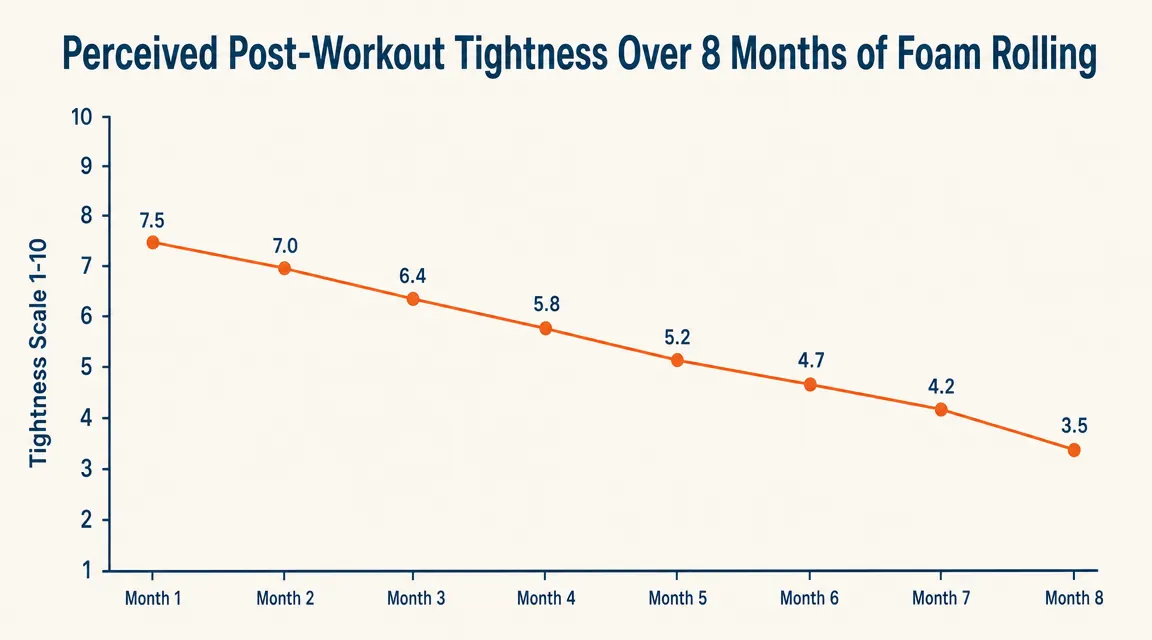
I tracked my perceived tightness in the left quad on a 1-to-10 scale at the start and end of each rolling session for the first three months, then spot-checked monthly after that. What I noticed: by week six the pre-session tightness scores had dropped from an average of 7.5 down to about 5. By month four they were hovering around 4. That is not just the roller, that is cumulative tissue work over time, but the GRID was the tool I used consistently while everything else in my routine stayed the same.
What the Multi-Density Surface Actually Does
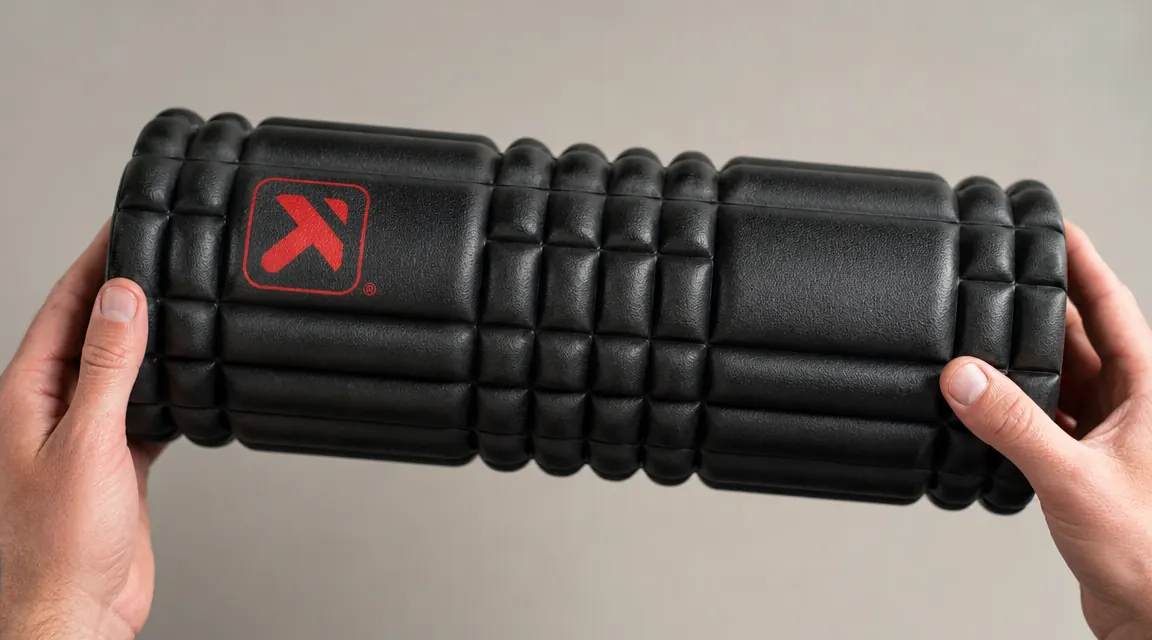
The GRID's surface has three different foam density zones arranged in a grid pattern. There is a firm flat section, a softer channel section, and a wider flat section with a different compression profile. When you roll over a knot or a trigger point, the surface changes what it contacts and at what pressure. A smooth roller hits everything at uniform depth. The GRID effectively mimics what happens when a massage therapist uses different parts of their hand to work a muscle, alternating between broad pressure and more targeted contact.
That difference is most obvious on the IT band and TFL. A smooth roller tends to slide past the tissue. The GRID's firmer raised sections catch on dense areas and create a shearing effect that actually moves the fascia. I felt that distinction immediately and I still feel it every session. It is not subtle.
For the thoracic spine, the channel running lengthwise down the center means you can position your spine in the groove and mobilize your thoracic segments without direct spinal compression. Every other foam roller I have tried has me carefully avoiding the spinous processes. The GRID makes that process automatic. This is probably the single biggest practical design win for me.
By month six, my left quad pre-session tightness had dropped from 7.5 to below 4. Same training load. Same warm-up. The only variable I changed was the roller.
Durability Over 8 Months
The GRID is built on a rigid hollow core with a foam surface bonded to it. That core is what prevents the oval deformation you see on budget solid foam rollers within weeks of use. After eight months and well over 200 sessions, my GRID is still perfectly round. The foam surface has softened very slightly from compression over time, probably 5 to 10 percent of its original firmness, but functionally it performs the same as it did on day one.
The 13-inch length is the standard size. TriggerPoint also makes a longer 26-inch version for back work, but I have found the 13-inch handles everything I need. It fits in a standard gym bag side pocket, which the longer version does not.
Where It Underperforms
The GRID is not for everyone and it is not perfect. The firmness level sits in the medium range and for advanced athletes with very dense tissue, particularly people who have been rolling consistently for years, it may not provide enough pressure on its own. I sometimes need to stack one foot over the other to increase the load on my left quad. That works, but a denser roller would not require that workaround.
If you are brand new to foam rolling, the GRID's surface texture can make the experience more intense than a beginner expects. It is not painfully aggressive, but it is noticeably different from the dull ache of a smooth roller. I have recommended it to two people who train with me and one of them found it too uncomfortable in the first two weeks and stopped using it. She went back to a smooth roller and has since built up her tolerance. For true beginners, a smooth medium-density roller first might be the smarter on-ramp.
The price is also a real consideration. At around $40 it is two to four times what a basic foam roller costs. For someone who is not sure if foam rolling will stick as a habit, that gap matters.
What I Liked
- Multi-density surface creates noticeably more targeted myofascial release than smooth rollers
- Hollow rigid core prevents oval deformation. Still perfectly round after 200-plus sessions
- Center channel allows thoracic spine work without direct vertebral compression
- Compact 13-inch size fits in a standard gym bag
- 4.7 stars across 31,000-plus Amazon reviews reflects consistent real-world results
- Lightweight at under 1 lb. Easy to travel with
Where It Falls Short
- Firmness may be insufficient for very advanced athletes with dense fascia who need maximum pressure
- Textured surface can feel intense for complete beginners. May require an adjustment period
- Higher price than basic foam rollers. Not ideal if you are still deciding whether rolling is a habit worth building
- 13-inch length limits full back-width coverage compared to 26-inch options
How It Compares to the Plain Foam Roller I Used Before
The comparison is not close. The smooth solid foam roller I used before compressed unevenly, lost its shape within months, and provided no real variation in surface contact. Rolling with it was more like applying general pressure to a muscle group than doing targeted myofascial work. It helped with general soreness, but it did nothing for specific adhesions or trigger points.
The GRID does targeted work. It is not a replacement for a sports massage or a physical therapy session, but it is the closest at-home tool I have found that approximates that kind of specific tissue engagement. If you want a side-by-side breakdown of what you are actually giving up by staying with a budget roller, I went deep on that in the TriggerPoint GRID vs plain foam roller comparison.
Using It the Right Way
Most people spend about 30 seconds on each muscle group and wonder why nothing changes. Effective foam rolling requires spending 60 to 90 seconds per muscle, pausing on tender spots for 20 to 30 seconds rather than continuously rolling, and breathing through the discomfort instead of bracing against it. The GRID rewards that kind of deliberate technique more than a smooth roller does because the surface variation gives you feedback about where the dense spots are.
For anyone who wants a full leg-day protocol, I put together a step-by-step guide covering quads, hamstrings, calves, and glutes in the right order at how to foam roll after leg day. The technique matters as much as the tool.
Who This Is For
The TriggerPoint GRID 1.0 is the right choice if you train at least two to three times per week, you already have some experience with foam rolling and know the basic technique, and you are tired of getting marginal results from a budget roller. Athletes dealing with recurring tightness in specific areas, IT band syndrome, thoracic stiffness, or hip flexor tension will benefit the most from the surface variation. It is also a smart pick for anyone who travels for work and wants one recovery tool that fits in a carry-on.
Who Should Skip It
If you have never foam rolled before and are not sure whether it will become a habit, start with a cheaper smooth roller. Build the habit first, then upgrade. If you are an advanced lifter or competitive athlete with heavily conditioned tissue, the GRID's medium firmness may not be enough, and you should look at the TriggerPoint GRID 2.0, which runs firmer, or a Rogue lacrosse ball routine for true pinpoint work. And if budget is the main constraint, a quality smooth medium-density roller at $15 to $18 will still give you 70 percent of the benefit at 40 percent of the cost.
Eight months in, mine is still perfectly round and still producing results. That is a rare thing in recovery gear.
The TriggerPoint GRID 1.0 has earned its reputation across 31,000-plus real user reviews. Check today's price and see if it fits your recovery budget.
Amazon Check Today's Price on Amazon →