
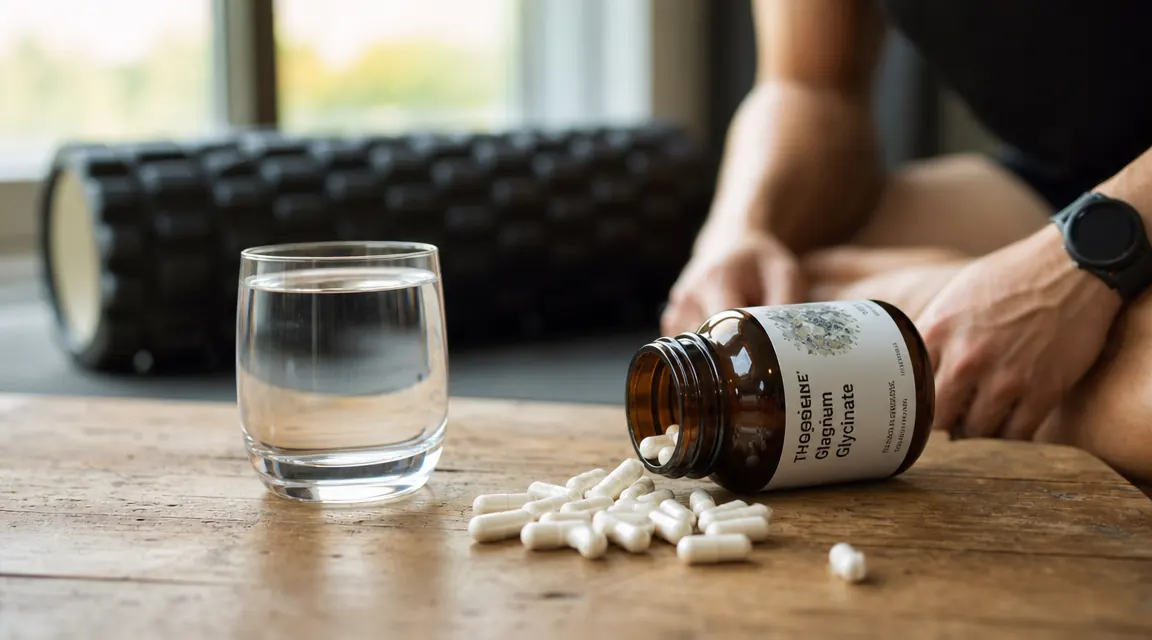
Most people who try magnesium for recovery buy the wrong form, take it at the wrong time, and quit after two weeks because they felt nothing. That is not a magnesium problem. That is a protocol problem. Magnesium glycinate is one of the most effective sleep-and-recovery supplements available to active adults, but only if you use it correctly. This guide walks you through exactly how to do that, step by step, including what changes at week 2, what changes at week 6, and what most athletes never figure out on their own.
I started taking magnesium glycinate after a stretch of weeks where my legs felt heavy going into sessions, my sleep was shallow, and I was waking up stiff rather than rested. A sports dietitian I trust pointed out that training-heavy adults deplete magnesium faster than sedentary people, and that most people running a magnesium deficit will not see it on a basic blood panel. Supplementing correctly fixed both my sleep quality and my next-day soreness more than anything else I had tried. What I am sharing here is the protocol that actually worked.
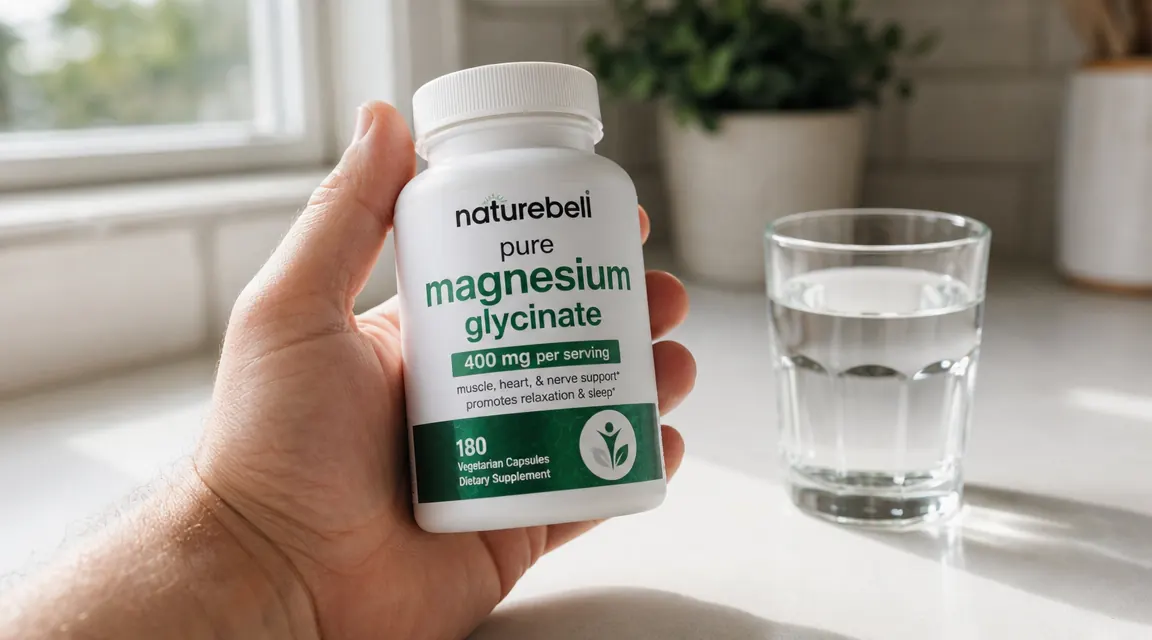
Want the supplement used in this guide? Naturebell Magnesium Glycinate is 500mg per capsule, fully chelated, and highly absorbable.
Naturebell is consistently rated 4.7 stars across more than 18,000 reviews. It is one of the cleanest, most affordable magnesium glycinate options on Amazon, and it is what I use nightly.
Amazon Check Today's Price on Amazon →Step 1: Choose Glycinate Specifically, Not Just 'Magnesium'
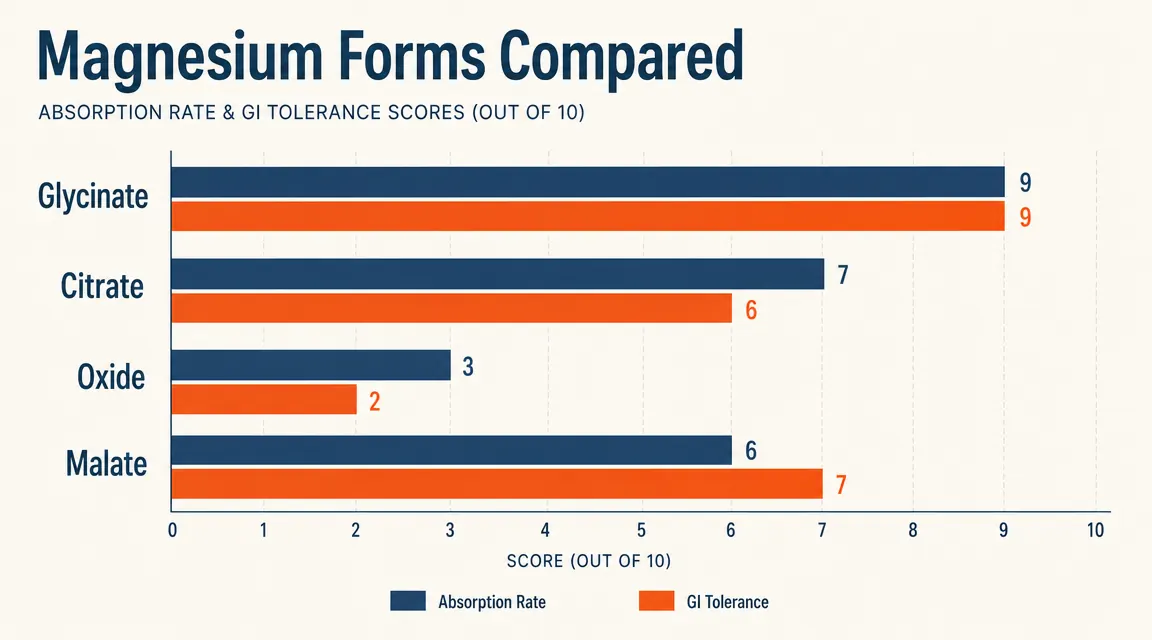
Walk into any supplement store and you will see magnesium oxide, magnesium citrate, magnesium malate, magnesium threonate, and half a dozen other forms. They are not interchangeable for recovery purposes. Magnesium oxide is cheap to produce but has roughly 4 percent absorption, meaning most of what you swallow passes right through. Magnesium citrate absorbs better but can cause loose stools at recovery doses, which matters when you are already pushing your gut with high-protein intake. Magnesium glycinate is bound to glycine, an amino acid with its own calming properties. It absorbs well, sits easy on the stomach, and the glycine component compounds the sleep-quality benefit that makes recovery magnesium worth taking in the first place. When the label says 'magnesium glycinate' or 'magnesium bisglycinate,' you are in the right category.
One thing to verify before you buy: the label distinction between 'magnesium glycinate' as a compound weight versus elemental magnesium. A capsule labeled 500mg magnesium glycinate contains roughly 50-75mg of elemental magnesium, not 500mg. That is normal. The Naturebell formula provides 500mg of the glycinate compound, which delivers approximately 60mg elemental magnesium per capsule. Most effective recovery protocols use two capsules nightly, landing you at 120mg elemental magnesium per serving. That number matters for the dosing step.
Step 2: Dial In the Right Dose for Your Body Weight and Training Load
The recommended dietary allowance for magnesium is 400-420mg elemental per day for adult males and 310-320mg for adult females. Active adults training four or more days per week lose magnesium through sweat and increased metabolic demand, which pushes the useful intake window higher. Most sports nutrition researchers suggest 300-400mg elemental per day as a supplementation target for athletes, depending on how much magnesium you are getting from food. Leafy greens, nuts, and legumes are high-magnesium foods. If your diet includes those regularly, you need less from supplementation. If you are eating a typical high-protein athlete diet heavy on chicken, rice, and eggs, you are likely underconsuming dietary magnesium and need to supplement the full range.
A practical starting point is two Naturebell capsules per night, which delivers 120mg elemental magnesium from the supplement. If you are eating a reasonably varied diet, that closing gap is enough for most people to feel a difference within two to three weeks. If you are experiencing significant muscle cramping, poor sleep quality, or heavy training volume, you can move to three capsules (180mg elemental) for the first two weeks before dropping back to two for maintenance. Do not exceed 350mg elemental from supplements alone without medical guidance. More is not better once your stores are replenished.
Step 3: Take It at Night, Not in the Morning
This is the mistake that causes most people to underrate magnesium glycinate. Morning supplementation does nothing for recovery sleep because the calming, muscle-relaxing effects of the glycinate form are timed effects that work best during the sleep window. Take it 30 to 60 minutes before bed. That timing lets the magnesium begin facilitating muscle relaxation and GABA receptor activity before you fall asleep, which is the mechanism that drives deeper sleep stages and reduces the overnight cortisol spikes that fragment recovery sleep in athletes.
Pair it with your other wind-down habits. I take mine at the same time I put my phone in the other room, which has been a reliable sleep trigger for me. If you train late in the evening, magnesium glycinate actually fits particularly well because the post-exercise elevated cortisol can delay sleep onset, and magnesium's GABA-supporting effect partially counteracts that. Take it after your post-workout meal, not before training. Magnesium does not improve workout performance in a short-term window; its value is entirely in recovery, and that window is the sleep you are about to get.
Take it 30 minutes before bed. That one timing shift is the difference between magnesium doing nothing and waking up with noticeably less next-day soreness after a hard session.

Step 4: Stay Consistent for at Least Three Weeks Before Evaluating
Magnesium glycinate is not a pre-workout stimulant. It does not produce a felt effect the first night in most people. What it does is replenish depleted tissue magnesium stores over two to four weeks of consistent use, and the recovery improvements are cumulative rather than immediate. Week one: most people notice that they fall asleep a little more easily, or that they wake up feeling slightly less tense. Week two: muscle soreness after hard sessions begins to feel shorter in duration, typically by 12 to 24 hours. By weeks three and four, people who were running a significant deficit often report a clear shift in sleep quality, less overnight waking, and better energy levels the morning after hard training days.
Track one thing during your first month, not everything. Pick one marker, either sleep quality on a 1-10 scale or next-day muscle soreness hours after a hard session, and log it each morning for 28 days. That single data point makes the before-and-after obvious and prevents the common pattern of stopping something that is working because the improvement came on gradually. Consistency wins here. Taking magnesium sporadically, two nights on, two nights off, is not enough to replenish stores and will produce the underwhelming results that give magnesium a bad reputation.
Step 5: Pair It With the Right Recovery Behaviors for Compounding Effect
Magnesium glycinate works best as one part of a functional recovery stack, not as a standalone fix. The athletes who see the biggest improvement are the ones who address multiple recovery inputs simultaneously. Post-workout protein within 45 minutes of training ensures muscle protein synthesis has the raw material it needs. Adequate hydration, including minerals lost in sweat, prevents the muscle cramping that magnesium alone cannot fully resolve if you are chronically dehydrated. Mechanical recovery tools, like a percussion massage gun for the first 15 minutes post-session, move metabolic waste products out of muscle tissue before inflammation sets in. Then magnesium glycinate handles the sleep window where the majority of tissue repair actually happens. These inputs are additive, not competing.
One pairing that deserves specific mention: magnesium glycinate and foam rolling before bed. Five minutes of light pressure rolling on the quads and calves, followed by 30 minutes on a screen-free wind-down, followed by magnesium glycinate capsules produces noticeably better sleep quality than any one of those inputs alone. I started doing this combination three nights per week after my two heaviest training days and one rest day, and the difference in how I feel at week 6 versus week 1 is not subtle. You can read more about how mechanical recovery tools compound with supplement timing in my full review of the Naturebell Magnesium Glycinate, linked below.
What Else Helps Recovery Sleep Beyond Magnesium
Magnesium handles the mineral deficiency side of poor recovery sleep, but two other variables trip up otherwise well-supplemented athletes. First, room temperature. Sleep research consistently shows that core body temperature drop at sleep onset is a major trigger for deep sleep stages. A room at 65-68 degrees Fahrenheit facilitates that drop; rooms above 72 do not. Second, training timing. Evening training sessions that end within 90 minutes of bedtime keep core temperature and cortisol elevated, and no supplement fully overcomes that input. If you train late and still struggle with sleep quality after consistent magnesium use, shifting training two hours earlier will do more than adding another supplement. Magnesium glycinate handles the physiological mineral side of the equation. The other variables are behavioral, and they are within your control.
On the supplement side, a few things pair well with magnesium glycinate without competing with it. Tart cherry concentrate (30ml before bed) has genuine research support for reducing exercise-induced muscle soreness and improving sleep duration in athletes. Zinc, typically via zinc picolinate, supports overnight testosterone and growth hormone secretion that drives tissue repair. Neither of these conflicts with magnesium timing. What does not pair well: high-dose calcium taken at the same time, since calcium and magnesium compete for the same transporters. If you take calcium, take it in the morning.
Naturebell Magnesium Glycinate 500mg: 240 capsules, fully chelated, no fillers, and it ships Prime.
Rated 4.7 stars by more than 18,000 buyers. At the current price it is the highest-value magnesium glycinate available on Amazon. Click through to check today's price and confirm it is in stock.
Amazon Check Today's Price on Amazon →