
If you've been told to take magnesium and gone looking for it on Amazon, you already know the problem: there are a dozen forms and most of the listings don't explain the difference. Magnesium glycinate and magnesium citrate are the two you'll see most often, and they are not interchangeable. One is built for sleep and nervous system recovery. The other is built to move things through your gut. Choosing wrong doesn't hurt you, but it does mean you're paying for something that isn't doing what you actually need.
Short answer: if your goal is deeper sleep and faster muscle recovery after hard training, magnesium glycinate wins clearly. If you need to address constipation or want a cheaper magnesium hit for general health, citrate works fine. The rest of this piece explains exactly why, so you can make the call with confidence.
| Category | Magnesium Glycinate | Magnesium Citrate |
|---|---|---|
| Primary use | Sleep, muscle relaxation, recovery | Constipation relief, general magnesium top-up |
| Bioavailability | High (chelated, slow absorbed) | Moderate-high (dissolves fast) |
| GI tolerance | Very gentle, rare stomach upset | Can cause loose stools at higher doses |
| Sleep effect | Strong , glycine is calming to the CNS | Mild at best |
| Muscle recovery | Strong , reduces cramping and DOMS | Moderate |
| Typical dose | 200-400mg elemental magnesium nightly | 200-400mg, often split across day |
| Price per dose | Slightly higher | Slightly lower |
| Best for athletes? | Yes | Not specifically |
Why Magnesium Form Actually Matters
Magnesium is bound to something in every supplement , oxide, citrate, glycinate, malate, threonate. That binding molecule determines how fast it absorbs, where it goes in the body, and what side effects you're likely to get. Magnesium oxide, the cheapest version in most grocery store multivitamins, has roughly 4% absorption. You're essentially buying expensive urine. Citrate and glycinate are both significantly better, but they work differently.
Citrate is magnesium bound to citric acid. It dissolves quickly, absorbs reasonably well, and has a mild osmotic effect on the intestines, which is why it's the form doctors recommend before colonoscopy prep and why it's marketed as a digestive aid. That laxative quality is a feature when you need it and a liability when you don't. At the doses active adults need for real recovery benefits , 350 to 400mg of elemental magnesium per day , citrate often causes soft stools or cramping. Some people tolerate it fine. Many don't.
Glycinate is magnesium bound to glycine, an amino acid. Glycine is itself calming to the central nervous system , it's the same amino acid found in collagen and bone broth that researchers have linked to improved sleep quality and reduced core body temperature at night. The chelated form (where glycine wraps around the magnesium molecule) survives the gut without triggering osmotic effects, meaning no loose stools at normal doses. For someone training five or six days a week and already dealing with GI stress from pre-workout stacks or protein powder, that tolerability difference is meaningful.
Where Magnesium Glycinate Wins
Sleep is the main reason to choose glycinate. The glycine component specifically supports deeper slow-wave sleep, which is where the majority of muscle repair and growth hormone release happens. Active adults who switch from citrate to glycinate consistently report the same thing: they fall asleep faster and they stop waking between 2am and 4am, which is when the body's cortisol naturally starts rising. Two weeks of nightly glycinate use is usually enough to notice the difference. It is not a sedative and it doesn't feel like melatonin. The shift is subtle, like your nervous system is simply quieter when your head hits the pillow.
Muscle recovery is the second win. Magnesium is required for over 300 enzymatic reactions in the body, including protein synthesis and ATP production. When you're magnesium-depleted from heavy sweat loss during training (which most people are if they aren't supplementing), muscle cramps and next-day soreness are worse. Glycinate's superior bioavailability means more magnesium actually gets into muscle tissue rather than getting flushed through the intestine. Athletes who track delayed onset muscle soreness (DOMS) after leg day or long runs typically report shorter recovery windows after 30 days of consistent glycinate use.
The glycine attached to the magnesium isn't just a delivery vehicle. It's doing its own work in the nervous system while the magnesium handles muscle and enzyme function. You're getting two active compounds for one capsule.
Where Magnesium Citrate Wins
Citrate is cheaper, more widely available, and perfectly adequate for someone whose only goal is correcting a baseline magnesium deficiency without any specific sleep or recovery agenda. It works. If you're 22 years old, sleeping eight hours without issue, recovering quickly, and just want to hit your daily magnesium target, citrate gets the job done for less money. The faster dissolution rate also means it can be useful in powder form, mixed with water, for people who struggle to swallow capsules.
Citrate also has a legitimate role in endurance sports where pre-race bowel clearance matters. Some marathon runners and triathletes use it strategically the night before a race for exactly that reason. That's a feature, not a flaw, when the context calls for it. The problem is that context is narrow. Most people taking magnesium for workout recovery and sleep don't want that effect, and they discover it the hard way after their first higher-dose week.
If sleep and muscle recovery are the goal, glycinate is the form to use
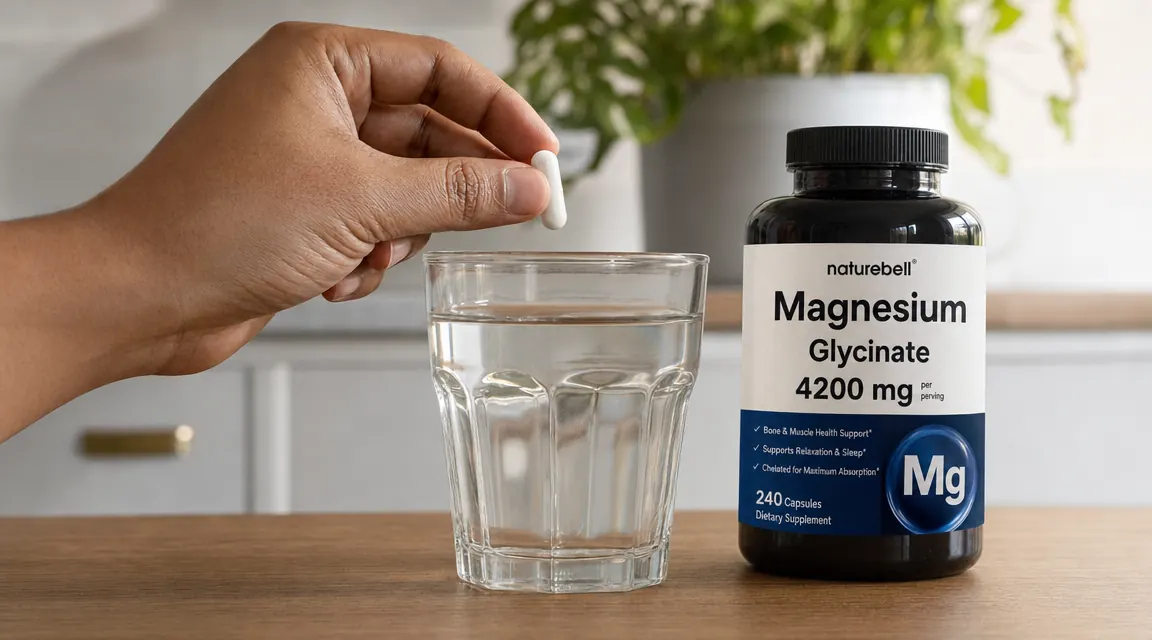
Naturebell's Magnesium Glycinate 500mg delivers 240 chelated capsules per bottle , that's an eight-month supply at a standard 1-capsule nightly dose. Rated 4.7 stars across more than 18,000 reviews from active adults who train.
Amazon Check Today's Price on Amazon →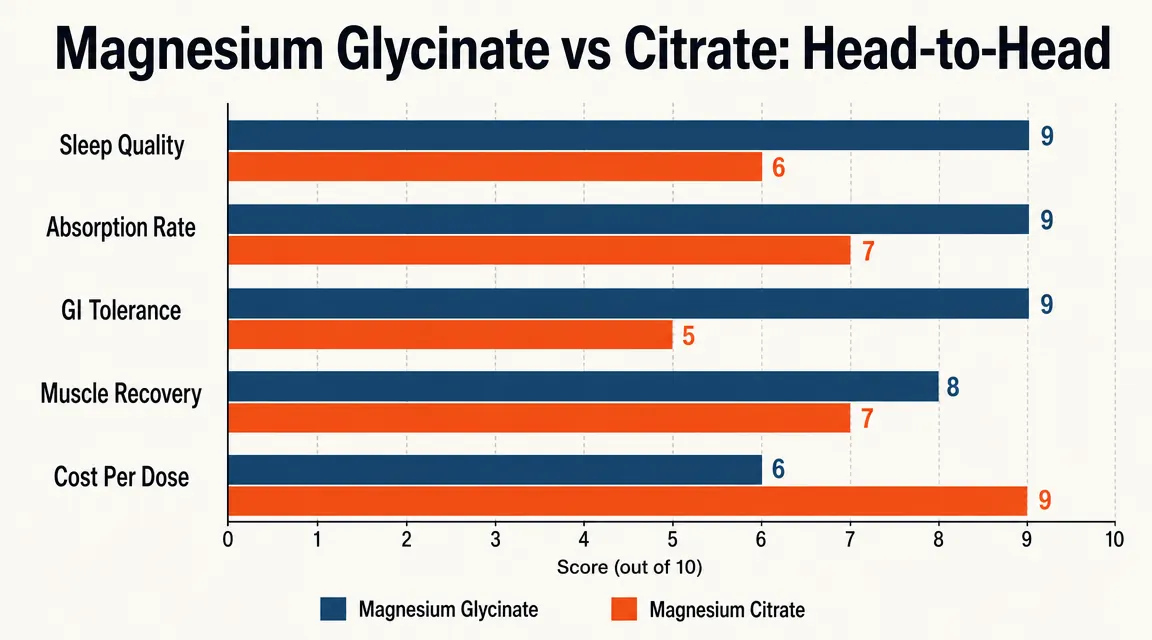
Naturebell Magnesium Glycinate: The Pick for Athletes
For active adults specifically, Naturebell's 500mg Magnesium Glycinate is the form worth using. Each capsule delivers 500mg of magnesium glycinate, which works out to approximately 84mg of elemental magnesium per capsule. At two capsules before bed, you're hitting roughly 168mg of elemental magnesium, which is a solid nightly dose for most 150-200lb athletes. The capsules are 100% chelated, meaning the glycinate bond is preserved through digestion. No fillers, no magnesium oxide padding the count.
The 240-count bottle is the practical advantage over competing brands. Most competitors sell 120 capsules, which runs out in two months at a two-capsule nightly dose. Naturebell's 240 count gives you a genuine four-month supply at that dose, or an eight-month supply if you're taking one capsule nightly. The per-capsule cost works out significantly lower than premium brands selling 120-count bottles at similar price points. For something you plan to take indefinitely as part of a recovery stack, that math matters.
There are a few legitimate caveats. At 500mg per capsule, the elemental magnesium content per capsule is lower than the label makes it sound to first-time buyers. That is not a quality issue; it's just how chelated forms work. The glycinate molecule is heavier than the magnesium it carries. If you need 300-400mg of elemental magnesium daily, you'll need three to four capsules, not one or two. That's still well within the cost advantage of this bottle size, but it's worth knowing before your first order.
Dosing and Timing: How to Actually Get the Sleep Benefit
Timing matters more than most magnesium guides acknowledge. For sleep specifically, take glycinate 30 to 60 minutes before bed, not with breakfast. The nervous system calming effect of glycine is dose-dependent and peaks roughly 90 minutes after ingestion. If you take it at 8am, none of that sedative-adjacent benefit reaches you at 11pm when you're trying to sleep. Evening dosing also aligns with the body's circadian drop in core temperature, which the glycine appears to support.
Start at one capsule (500mg glycinate, roughly 84mg elemental) for the first week and assess GI response before moving to two. Even though glycinate is the gentlest form, starting lower gives your gut time to adjust if you've been consistently magnesium-depleted. Expect a subtle change in sleep architecture within seven to fourteen days, not a dramatic knockout effect. The people who quit after three days thinking it doesn't work are usually the same people who expect melatonin-level sedation. Glycinate doesn't work that way. It works gradually, and then one morning you realize you slept through the night for the fifth day in a row.

Who Should Buy Glycinate
Magnesium glycinate is the right call for anyone training four or more days a week who is dealing with one or more of these: frequent night wakings, trouble falling asleep on heavy training days, leg cramps or foot cramps at night, slow recovery from intense sessions, or afternoon energy crashes that suggest poor sleep architecture. It's also the right call for anyone who has tried citrate and experienced GI side effects at the doses needed for real benefit. If you're currently taking a magnesium oxide multivitamin and wondering why you're not noticing any effect, you haven't tried real magnesium yet.
Who Should Skip Glycinate (and Take Citrate Instead)
If your primary use case is constipation relief, magnesium citrate is purpose-built for that and will work faster and more predictably. If budget is the main constraint and you only want a low-cost magnesium top-up without specific sleep intentions, citrate in powder form is a cost-effective option. And if you have been diagnosed with a kidney condition, talk to a doctor before starting any magnesium supplement, as both forms require healthy kidney function to clear properly. For most active adults without kidney issues who are training consistently and sleeping poorly, glycinate is the better investment by a meaningful margin.
Stop losing recovery time to bad sleep and low magnesium
Naturebell Magnesium Glycinate 500mg is the most cost-effective chelated glycinate on Amazon , 240 veggie capsules, 100% chelated, no magnesium oxide filler. Check today's price before the bottle size changes.
Amazon Check Today's Price on Amazon →