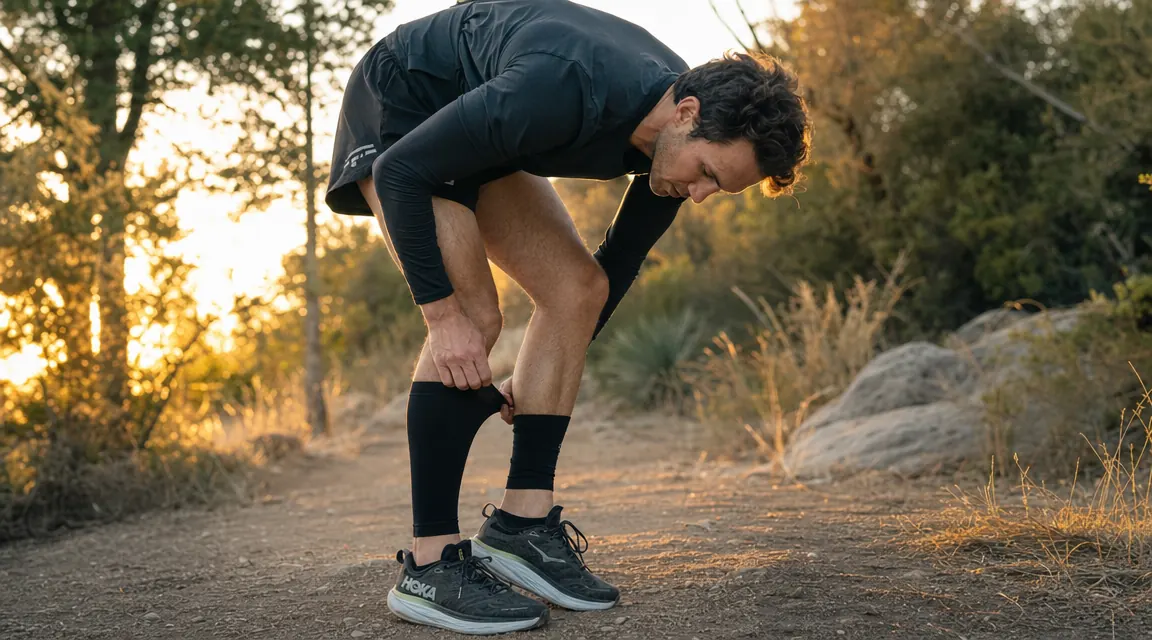
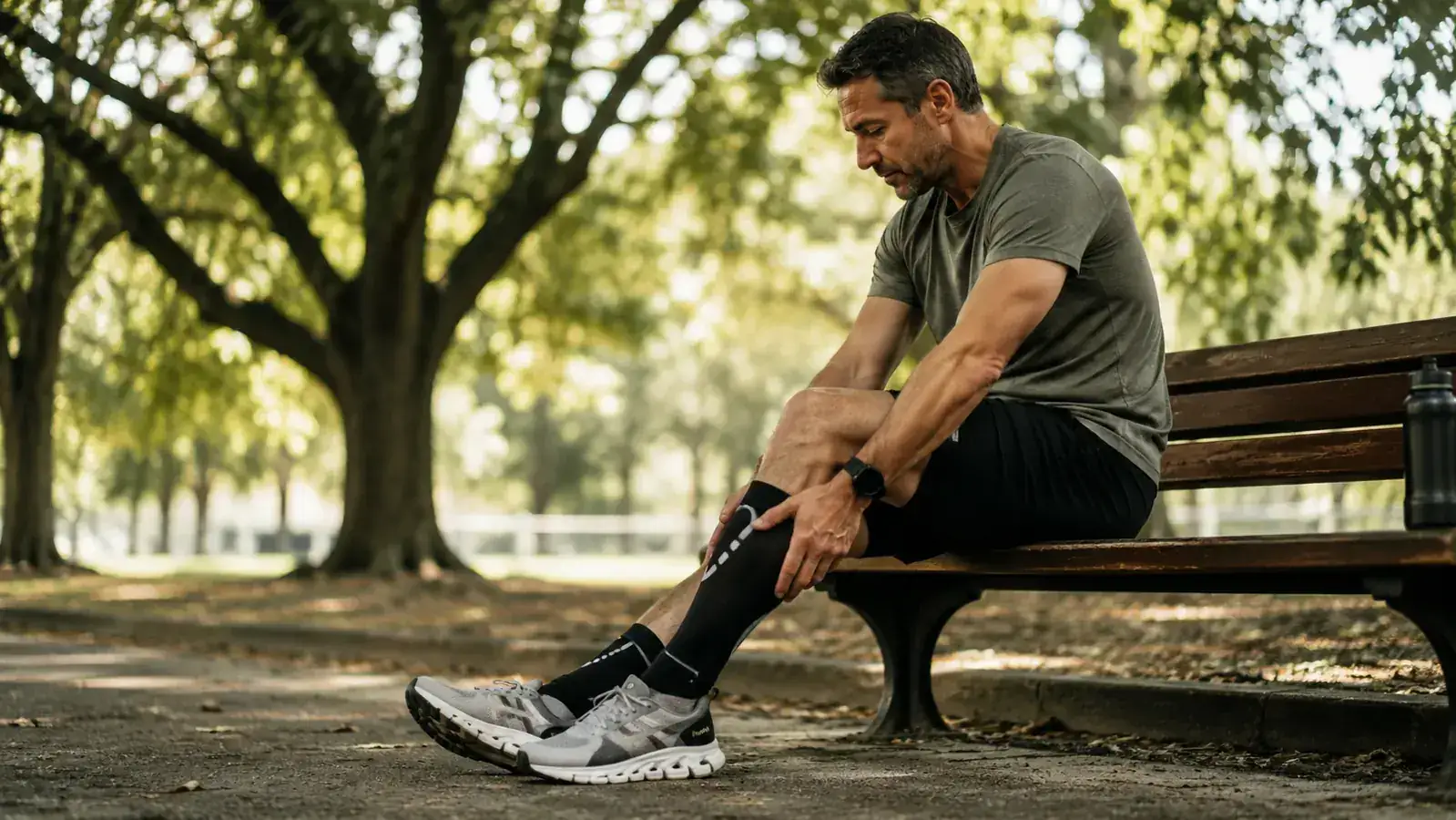
When my left calf started barking every time I hit mile four, a physical therapist handed me two options: a calf compression sleeve or full compression socks. She said both could help, but for different reasons. That conversation stuck with me because most runners I know have never actually thought about the difference. They grab whatever is cheaper on Amazon and hope for the best.
The short answer is this: if your problem is calf tightness, shin splints, or post-run soreness in the lower leg, a calf compression sleeve gives you targeted support without the heat and fit complications of a full sock. If your issue runs deeper into the foot, or you need circulation support from heel to knee, compression socks cover more ground. For most recreational runners training 3-5 days a week, the sleeve wins on versatility. Here is why, and where each one earns its place.
| feature | left | right |
| feature | left | right |
| feature | left | right |
| feature | left | right |
| feature | left | right |
| feature | left | right |
| feature | left | right |
| feature | left | right |
Where the BLITZU Calf Sleeve Wins
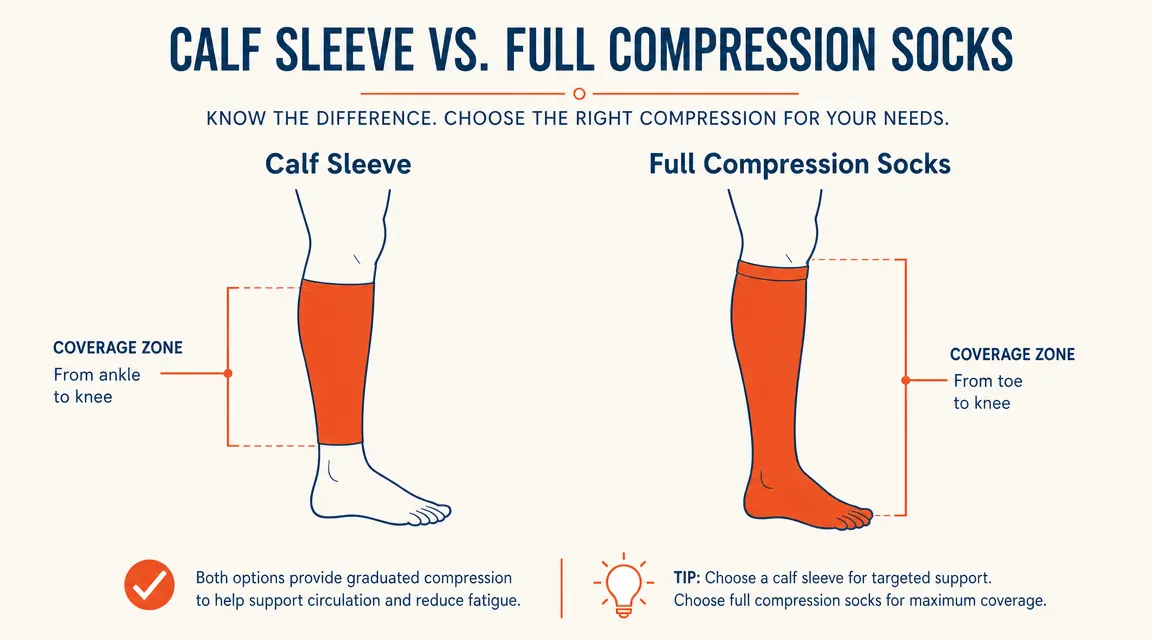
The biggest advantage a calf sleeve has over full compression socks is that you can wear it with any pair of running shoes, technical socks, or casual footwear without conflict. I wear the BLITZU sleeve under my regular moisture-wicking running socks. The sleeve sits from just above the ankle to just below the knee, and my running sock goes on top. There is no bunching, no pressure on the toe box, and no heat buildup around the foot. That matters on a 75-degree morning when full compression socks would have me stopping to peel them off by mile six.
The BLITZU sleeve also sits at a price point that makes it easy to own two or three pairs. At under $15, you can keep a pair in your gym bag, a pair by the door for recovery days, and still have budget left over. After 5 months and somewhere around 40 washing cycles, mine has held its compression without the fabric going slack the way cheaper tube socks do. The 20-30 mmHg compression range is firm enough to feel functional without cutting off circulation, and the sizing chart has been accurate in my experience, which is not something I can say for every compression product I have tried.
Your calves are sore because the right compression is still sitting in a cart.
The BLITZU Calf Sleeve has 24,000+ reviews and costs less than a recovery protein shake. Check the current price on Amazon before your next run.
Amazon Check Today's Price on Amazon →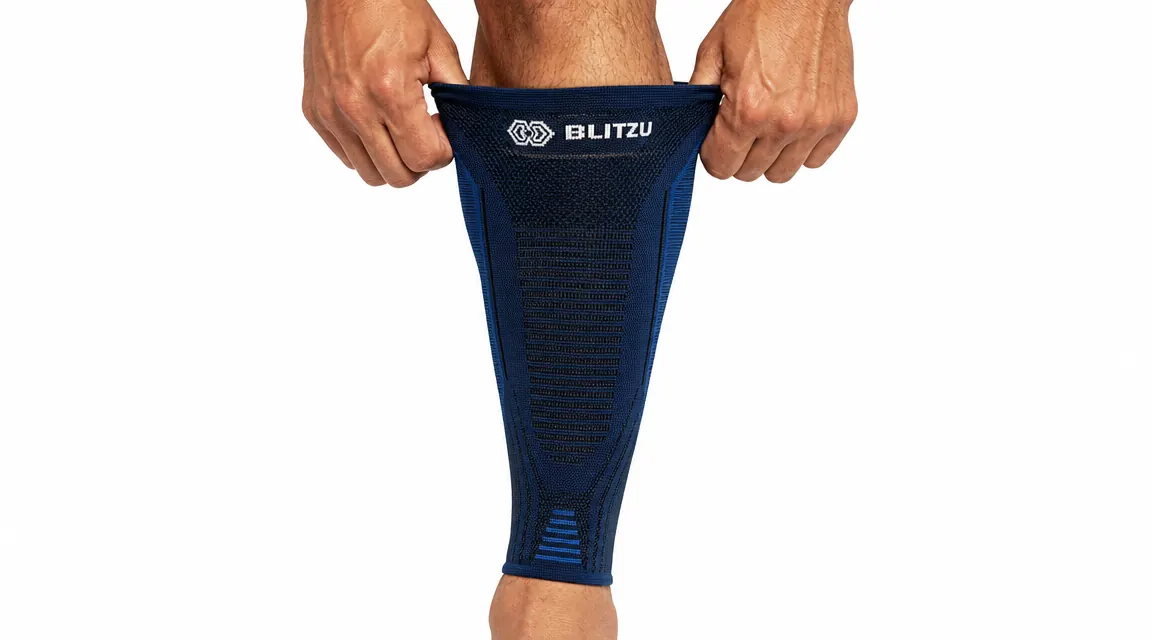
Where Full Compression Socks Win
Full compression socks have a legitimate edge in one specific situation: when your recovery problem is not just in the calf but runs through the plantar fascia, arch, or ankle. If you have plantar fasciitis, Achilles tendinopathy, or you spend a lot of time on your feet after long races, foot-to-knee coverage supports the whole chain. The graduated compression starts at the foot and increases as it moves up, which is better for venous return when you are sitting or standing for extended periods. Long-haul flights, post-marathon days spent on the couch, and recovery from ankle sprains are all situations where the full sock earns its keep.
The tradeoff is that you are essentially wearing a specialized sock, which means your regular performance sock is out and you are dealing with whatever the compression sock's cushioning and toe seams offer instead. For everyday training recovery, that is more friction than most runners want to deal with. And in summer months, full compression socks can turn a warm recovery walk into an uncomfortable one.
A calf sleeve slips on over any sock you already wear, costs under $15, and is in the wash and dry by tomorrow morning. That is a recovery tool you will actually use consistently.
Compression Mechanics: What Each One Actually Does to Your Muscle
Both products apply graduated compression to reduce swelling and help clear metabolic waste from fatigued muscle tissue. The mechanism is the same: external pressure improves venous return, which moves blood back to the heart faster and reduces the pooling that contributes to that heavy, aching feeling in your legs after a hard effort. The difference is where that pressure is applied and how concentrated it is.
A well-fitted calf sleeve applies its full pressure budget to the calf belly and shin, which is exactly where most runners feel soreness after track workouts, tempo runs, and hill repeats. Full compression socks divide their compression across a larger area, which means the calf gets a meaningful squeeze but not the same concentrated force. If shin splints are your specific problem, the sleeve targets the tibialis anterior more directly. If overall post-run heaviness from the foot up is your problem, the full sock works the entire lower kinetic chain.
Research on compression garments for running recovery consistently shows reduced muscle oscillation during exercise and modest reductions in delayed onset muscle soreness in the 24-48 hours after a hard session. Neither a sleeve nor a full sock is going to eliminate DOMS, but both can meaningfully reduce the peak intensity. Most runners I have spoken to notice the difference most clearly around the 36-hour mark, when soreness would otherwise peak.
Practical Fit and Wear Considerations
One thing the product comparison charts never tell you is how these items feel at hour three of a long slow run. I have worn both. Full compression socks, even well-made ones, start to feel like a decision by mile 12. The sock component adds about 10-15 minutes of pre-run setup time when you are trying to layer them correctly under trail shoes. If the toe box is even slightly off, you will feel it. Calf sleeves sidestep all of that. You pull one on in 15 seconds, put your normal socks and shoes on top, and you are done. That ease of use is underrated as a recovery compliance factor.
Sizing matters significantly for both. With the BLITZU sleeve, you measure your calf circumference at its widest point and follow the chart. Most men and women with average to athletic calves fall into the medium or large range. Going too small means the sleeve will roll down during a run. Going too large means it will not generate enough compression to do anything useful. If you are between sizes, size down with the BLITZU because the fabric has moderate stretch. With full compression socks, you are sizing for both calf circumference and shoe size, which means there are more places to get it wrong.
Who Should Buy Which
Buy the BLITZU Calf Sleeve if you are a recreational runner or gym-goer dealing with calf soreness, shin splints, or general post-workout tightness in the lower leg. It is the right tool if you train 3-5 days a week, want something that works with your existing footwear, and need a product you will actually reach for consistently rather than one that requires a 10-minute sock ceremony. The price makes it low-risk to try, and the 24,000+ reviews suggest the sizing and compression level are dialed in well enough to work for a wide range of body types and training volumes. Read the full long-term experience in the BLITZU calf compression sleeve review to see how it holds up through 5 months of shin splint training before you buy.
Choose full compression socks if your issues extend below the ankle. Plantar fasciitis, arch pain, Achilles tendinopathy, or post-race recovery days where your feet are taking as much beating as your calves all call for the full coverage that only a sock provides. They also make more sense if you spend significant time sitting during your recovery day, such as a long drive or flight after a race, because the graduated pressure from foot to calf is most effective for circulation when you are stationary. That said, at two to four times the price of a quality sleeve, they are a more deliberate purchase. Also worth reading: the 10 reasons compression sleeves help runners recover for the science behind why graduated compression works in the first place.
The BLITZU sleeve costs less than your last energy gel order and works every run.
Over 24,000 runners have rated it 4.5 stars. If your calves are the weak link in your training, this is where to start. Check today's price and size chart on Amazon.
Amazon Check Today's Price on Amazon →